Newsletter
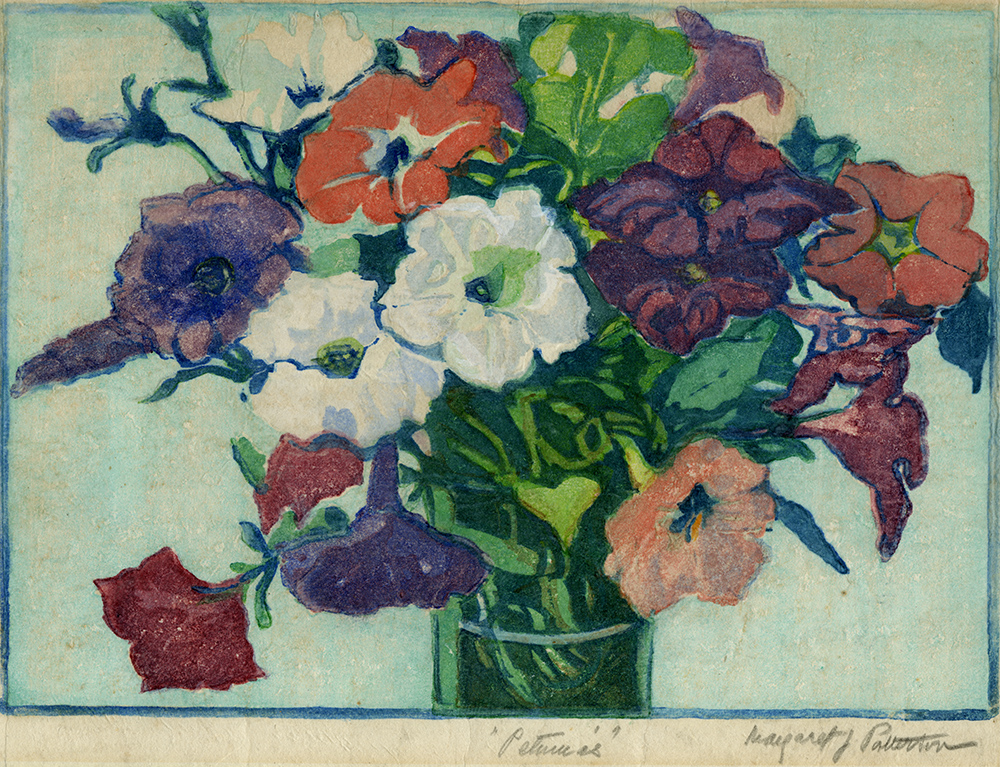
Margaret J. Patterson - Petunias, c. 1920-1950, 7 ¼" x 10 ⅛", Signed in pencil (lower right), titled in pencil (lower center).
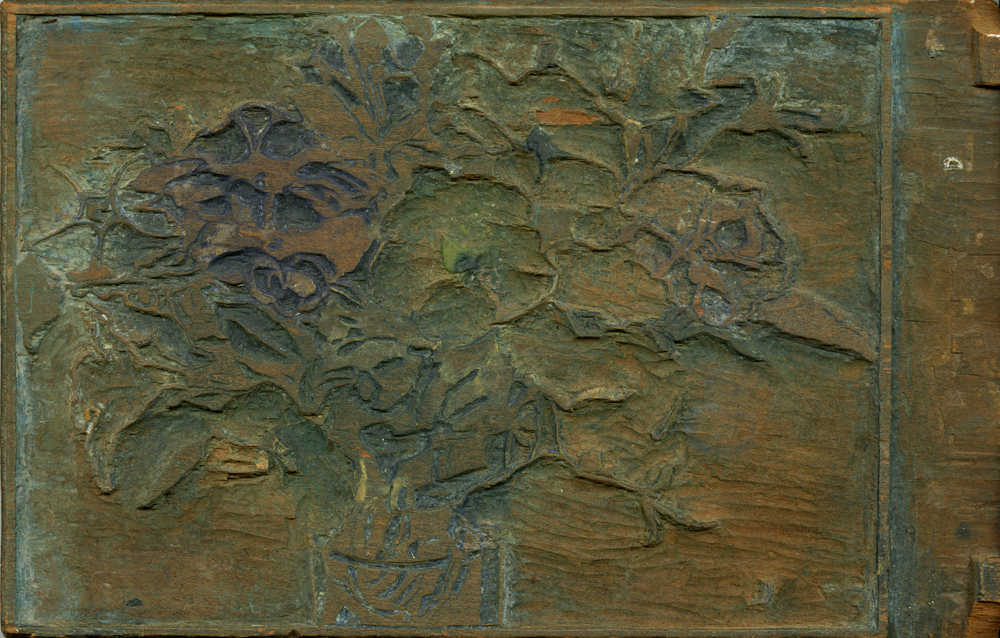
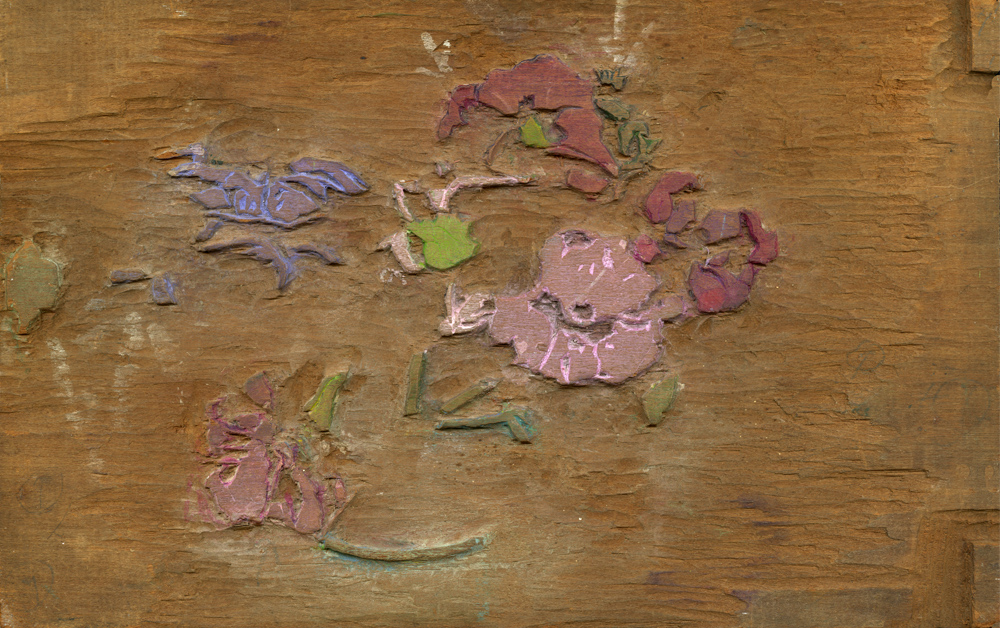
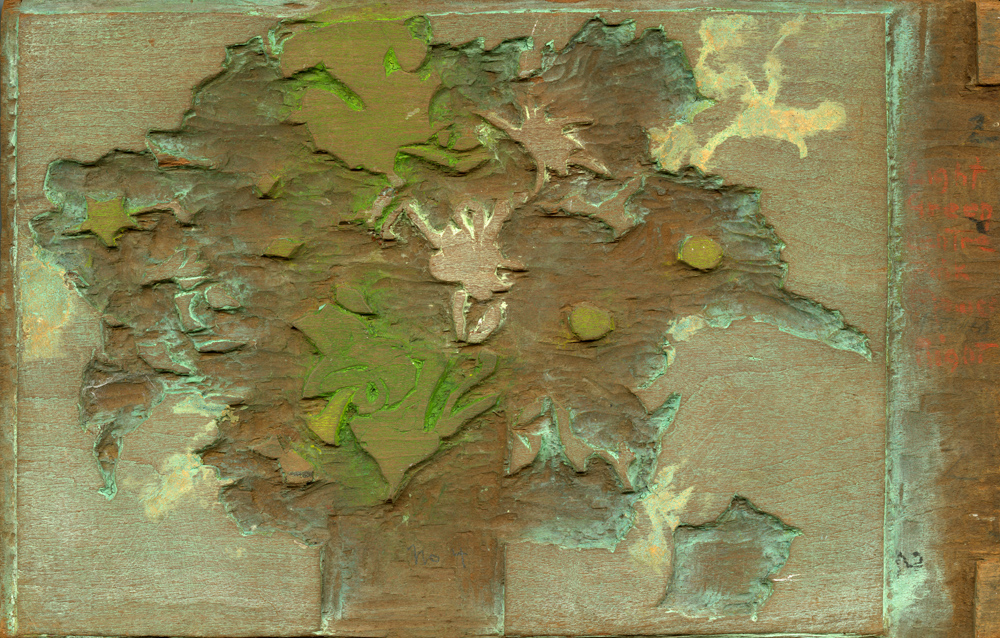
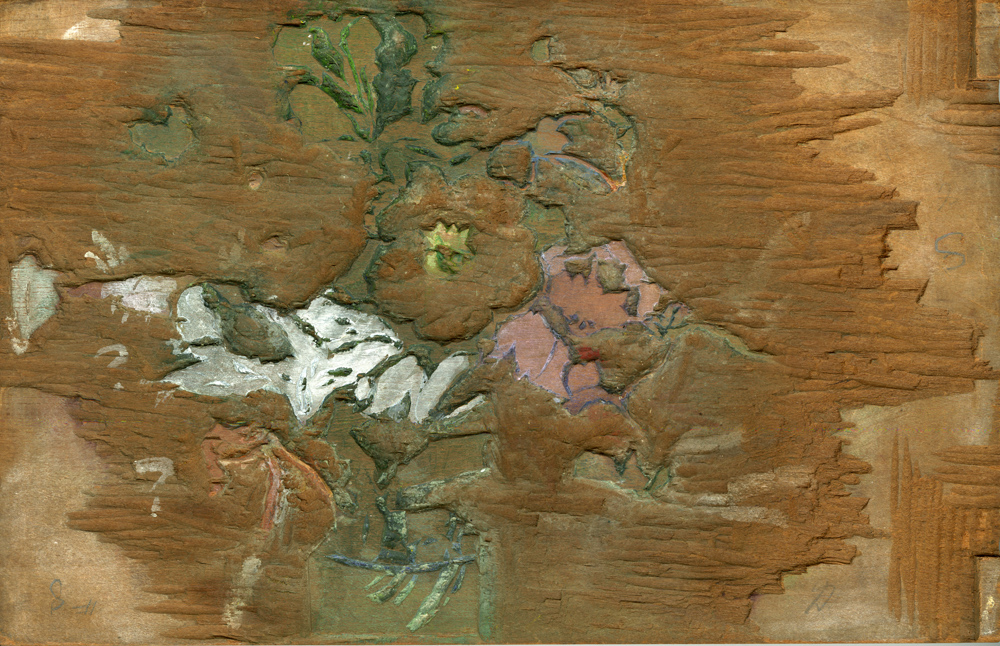
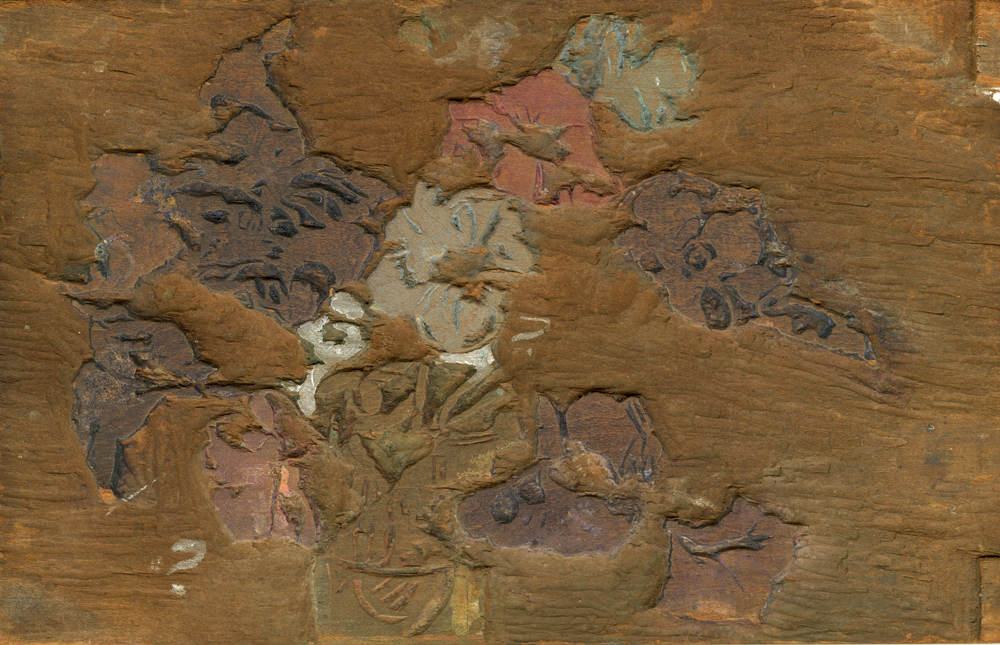
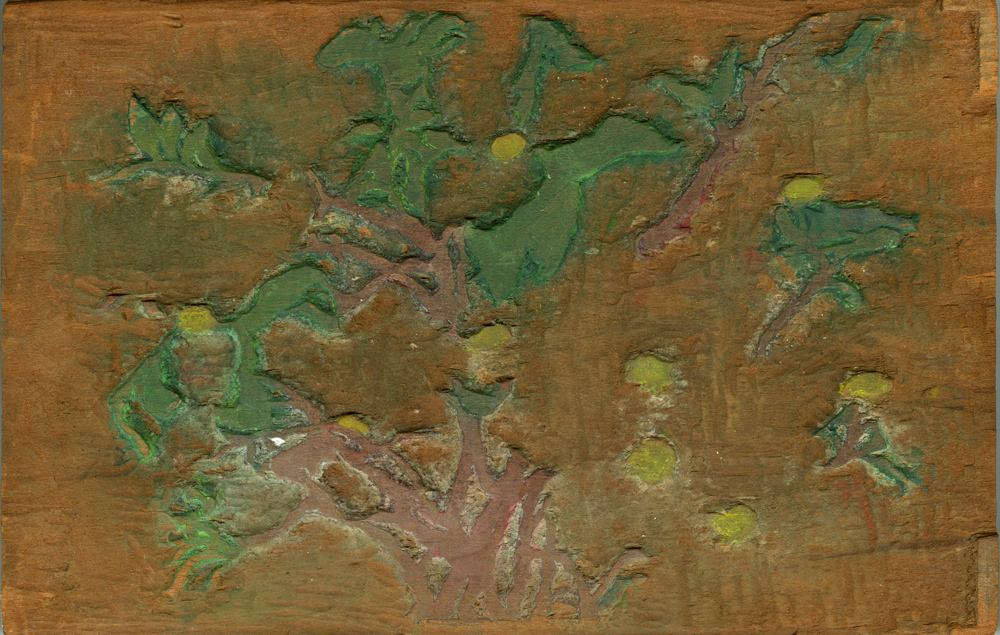
The Two Red Roses Foundation has recently acquired Petunias (1920-1950), a color woodblock print by American printmaker Margaret Jordan Patterson (1867-1950), along with the three double-sided original, carved wooden blocks used in printing this signature floral woodcut. Master Printmaker Margaret Patterson created multiple color woodblock prints with complicated techniques. The double-sided blocks now in the TRRF collection offer a testimony of the highly developed procedures Patterson used in the execution of Petunias. Since it is beyond the scope of this publication to offer intricate details on the process of creating multicolor prints, we present below a short explanation of the basic method for creating a simple two-color woodblock print, for example, a yellow flower with a black outline.
The process always starts with creating a tracing paper drawing from a series of pencil sketches. Next, two separate blocks of wood or plywood, as thin as ⅜" of an inch or less, are cut to exactly the same dimensions of the tracing paper drawing and sanded smooth. Soft woods such as birch plywood, basswood, pine or even cherry can be used. Linoleum, a flooring material, can also be carved & printed in the same way.
The tracing paper drawing is flipped over and turned face down on the two carving blocks. Using a pencil, the outline of the flower is transferred to the surface of the carving block and, again using a pencil, the inside of the flower is transferred on the second block. The artist must be careful to position perfectly the tracing paper drawing onto the two blocks (registration), so that the two different areas (outline and inside of flowers) align perfectly in the final finished print.
Using sharp carving tools, the artist follows the pencil lines, leaving alone the shapes that will print. The resulting raised or relief areas of the wood will hold the ink. Anything that should not print has been carved away. On one block (the outline block also called a “key block”) the inside of the flower is carved away, leaving just the black flower outline. On the other block, the black outlines are carved away leaving just the yellow parts of the flower. When ready to print, black ink is rolled onto the raised areas of the key block using a roller with a handle called a “brayer”. Next, yellow ink is rolled onto the raised wood of the second block, which prints the yellow flower shape.
A sheet of paper is then carefully placed on top of the inked yellow block, because the lightest colors are printed first and darkest last. Using a press or printing by hand with a round, flat traditional “baren” or just a wooden spoon, the back of the paper is rubbed until the yellow ink transfers from the block to the paper. Then, the same piece of paper with the printed yellow flower is carefully aligned and placed on the black block, ink-side down. The black ink outline is then transferred as well, on top of the yellow ink. Upon finishing, a two-color woodblock print of a yellow flower, outlined in black, is produced.
This process can be repeated for as many prints as needed. To add more colors, more blocks would have to be carved. Color woodblock prints are deceptively simple when viewed, but they can be astoundingly complex to make. There are so many variations in the numbers of blocks, kinds of ink, papers and technique that can’t be covered here.
These are not merely reproductions, and the minute variations and experimentation at any stage make each and every woodblock print a unique work of fine art. In no other medium is the solo artist doing the work of the draftsman, designer, colorist, carver and printer. Unlike etching and other forms of printmaking, mechanical assistance is not at all necessary and woodblocks are done with the simplest of tools. The production is long and complex but the rewards are great, making the woodblock print truly a work of head, heart and hands.
Margaret Patterson’s Petunias is a one such example of a sophisticated Arts and Crafts Movement period woodblock print. For more in-depth information about creating a multiple color woodcut, click here to read Margaret J. Patterson's Petunias: The Making of a Multiple Color Woodcut by Holly Bird.
Holly Bird is a designer and illustrator. She’s a Roycroft Master Artisan in printmaking and teaches printmaking at the Dunedin Fine Art Center in Dunedin, FL. Her work can be found on studioibis.com.
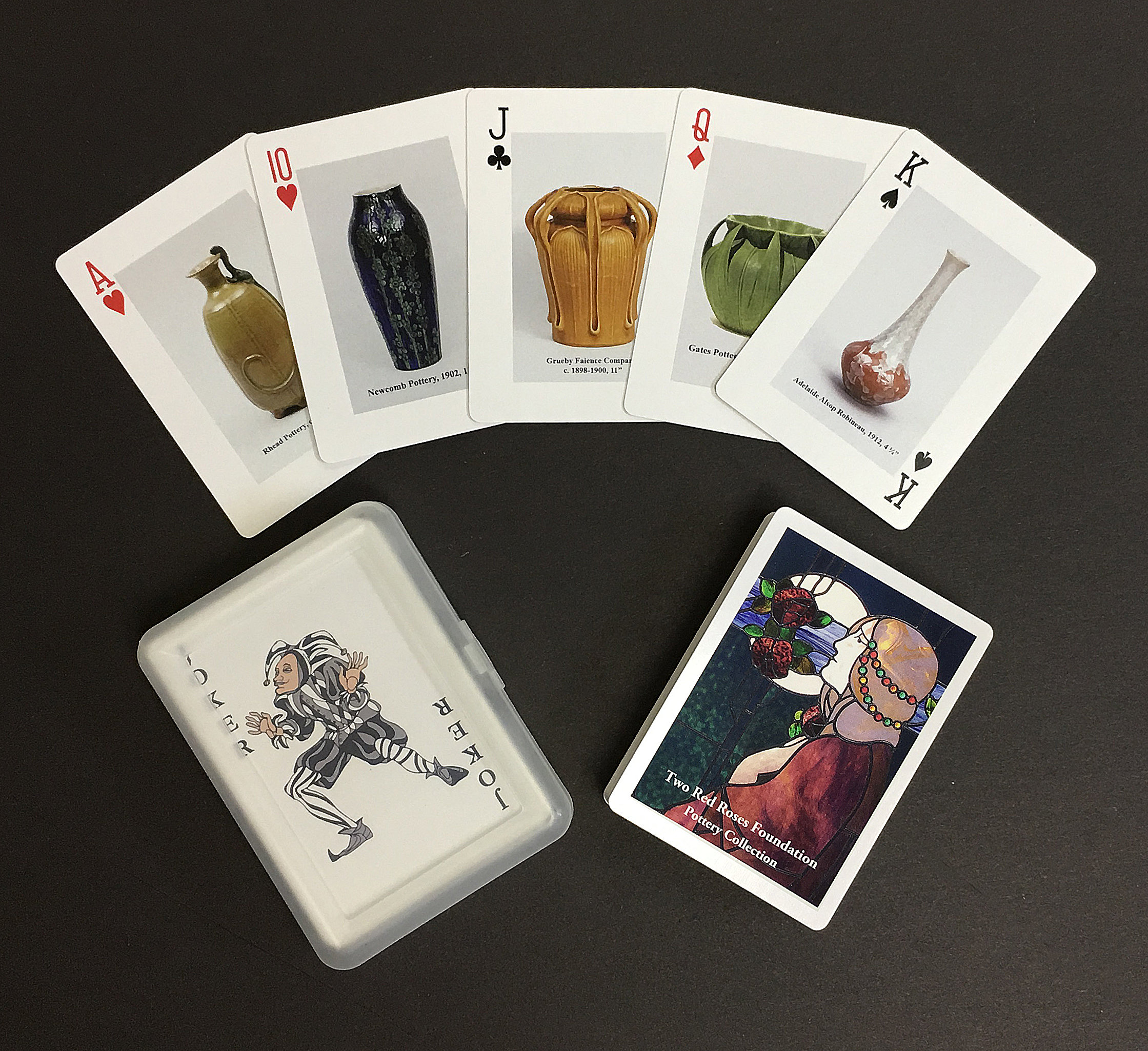
This is the first in the Playing Cards Portfolio featuring rare pottery followed by future decks focusing on furniture, metalwork, lighting, photography, and woodblocks.
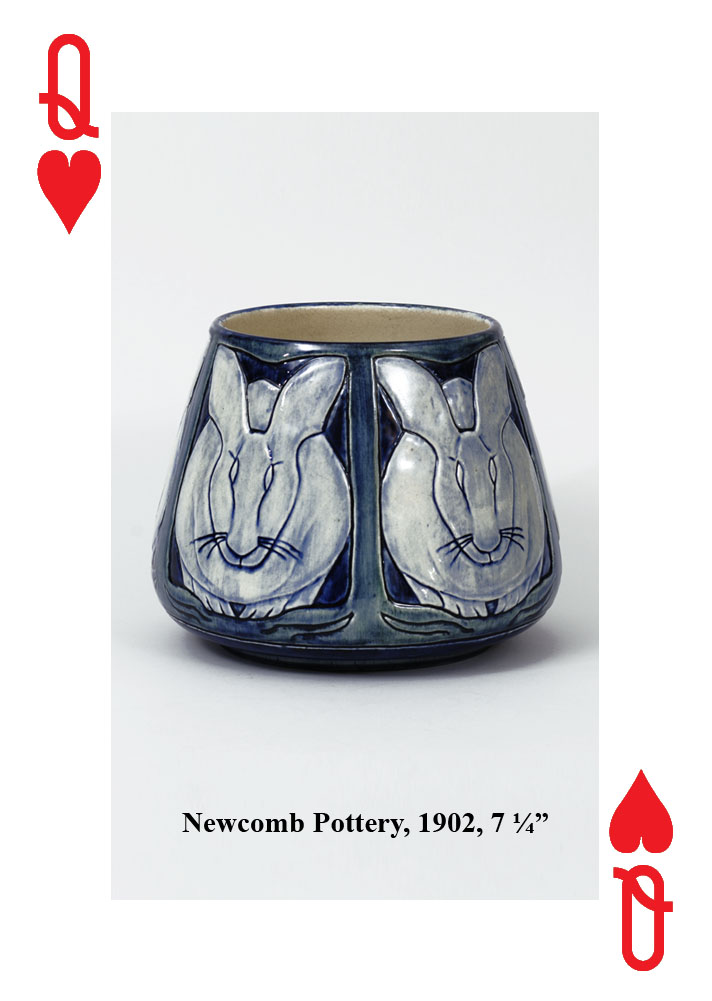
America’s love for card games goes back hundreds of years. From Bridge to Poker to Solitaire, card games are still an immensely popular form of entertainment among diverse groups of all ages. The TRRF thought it would be a fun and informative project to create a standard deck of 54 playing cards including two Jokers that would include, on the face of each card, an image of an Arts and Crafts object from the Two Red Roses Foundation’s collection. Beautifully illustrated and captioned, this deck of cards is a unique and entertaining way to visually improve one’s knowledge and appreciation for the genre. A perfect gift for Arts and Crafts lovers.
AVAILABLE ON OUR WEBSITE
$10.00
FREE SHIPPING